Seven illustrations from A Dweller on Two Planets, set beside the versions Cineira built with AI. Not the final look of the film. A direction, and a sense of what is possible.
By Dan Neira
I was a young man when I had the dream.
I was standing at the rail of an aerial ship. It made no sound. None. We were gliding low over open ocean, and ahead of us the water opened into the mouth of a moat that ran into a city. A colossal stone statue stood at the entrance, something out of ancient Greece, rising into the sky.
As we drew near the opening I looked straight down over the side. There was a whale. It was lying on a huge slab of what looked like cement at the edge of the water, lifting its tail and letting it fall. Slowly. Over and over. I was maybe fifty feet up, and I could hear it. That wet slap of a tail on stone, clear as anything.
What I felt was peace. Complete peace.
I don't know what that dream means. I know it never left.
Decades later I read A Dweller on Two Planets for the first time. Phylos describes the vailx, the airships of Atlantis. Silent. A silver-white spindle. An open deck at one end, and a rail, where Prince Menax sits in a deck chair and looks over it at the ground two miles below. And the capital, Caiphul, circled by a moat that runs out to the sea.
I read that and put the book down for a minute.
Then, this year, we built our own version of the moats of Caiphul, and the dream came back into focus like it had been waiting.
I'm not claiming anything. Make of it what you want. But you should know why this story has such a hold on me.
What you're looking at
A Dweller on Two Planets was written by Frederick S. Oliver, a teenager living in the shadow of Mount Shasta in the 1880s, who said it was dictated to him by a spirit named Phylos the Thibetan. It was published in 1905, after Oliver's death, with a handful of plates. A 1940 edition added new illustrations, most of them by an artist who signed his work Edou Martin.
We are developing the book as a feature film. Part of that work is figuring out what Atlantis looks like on a screen. So we took the plates, eleven from the 1940 edition and four from 1905, and rebuilt each one as a modern concept image.
Two things, stated plainly. These images were made with AI tools, directed by our team. And none of them is the final design of the film. They are sketches toward a direction. Some are close. Some will change a lot. The real design work still belongs to artists and a production designer, and that's how it should be.
Here are seven, in the order they happen in the story.
1. The city that runs on rails
1940 edition
Cineira concept
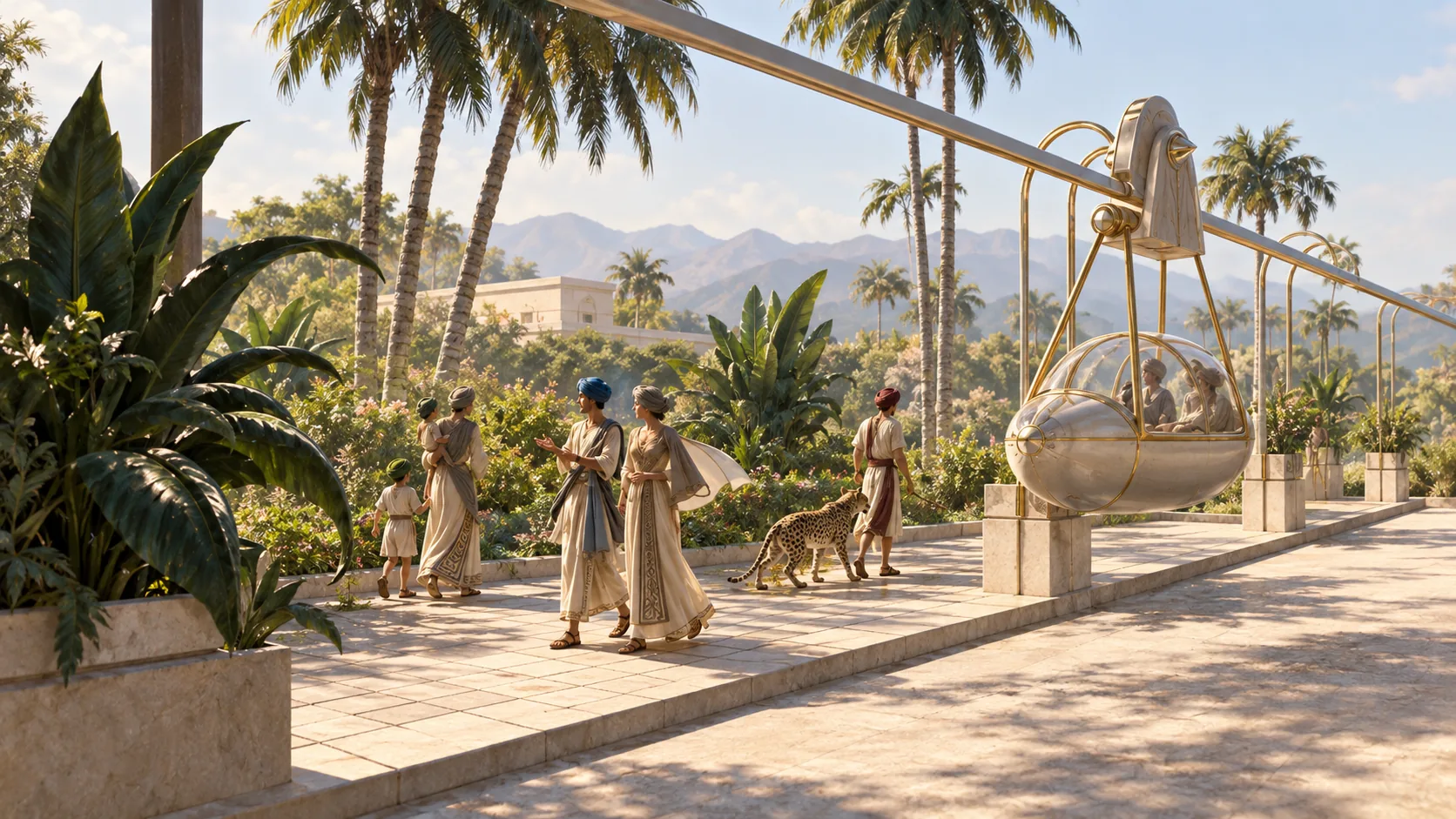
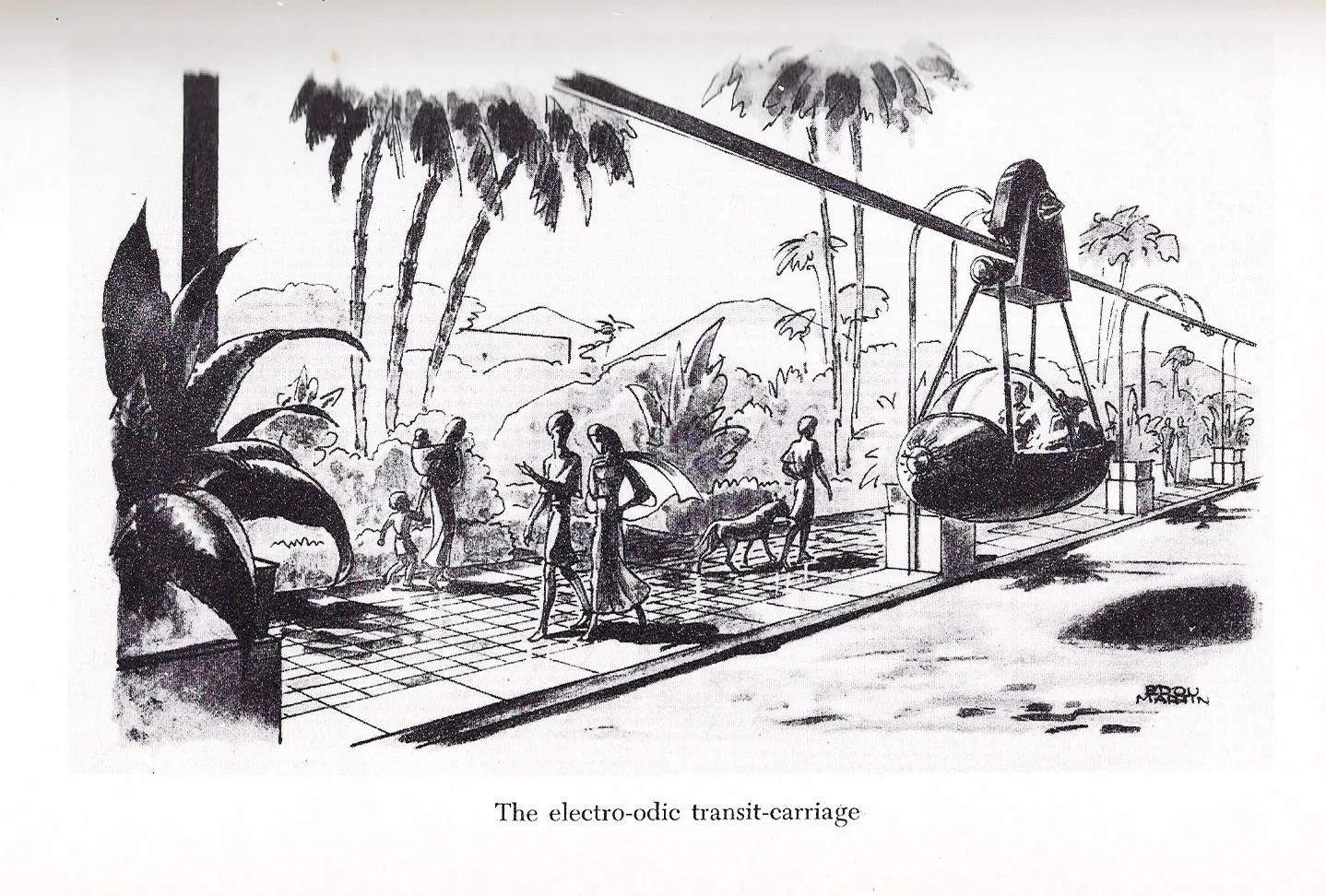
Zailm is a boy from the mountains who comes down to Caiphul to study. The first thing that hits him is the city itself. Carriages hang from metal rails nine feet above the avenues. Birds fly uncaged through the gardens. Everything moves in near silence.
Martin drew it as a clean line diagram of the future, which is what 1940 wanted. We pushed it toward sunlight and heat, a place you could smell. The rail and the hanging car come straight from the text.
2. The old way
1940 edition
Cineira concept
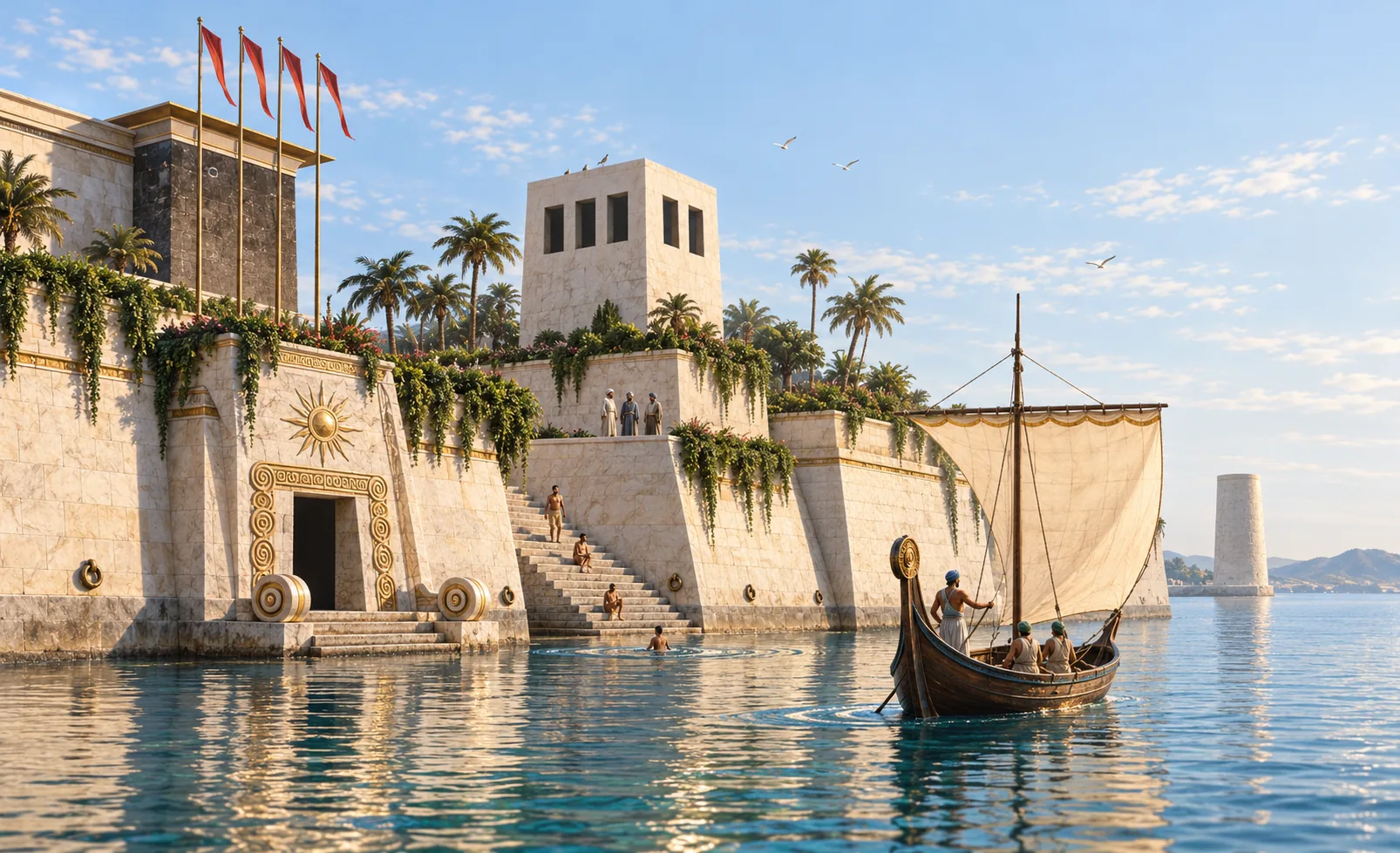
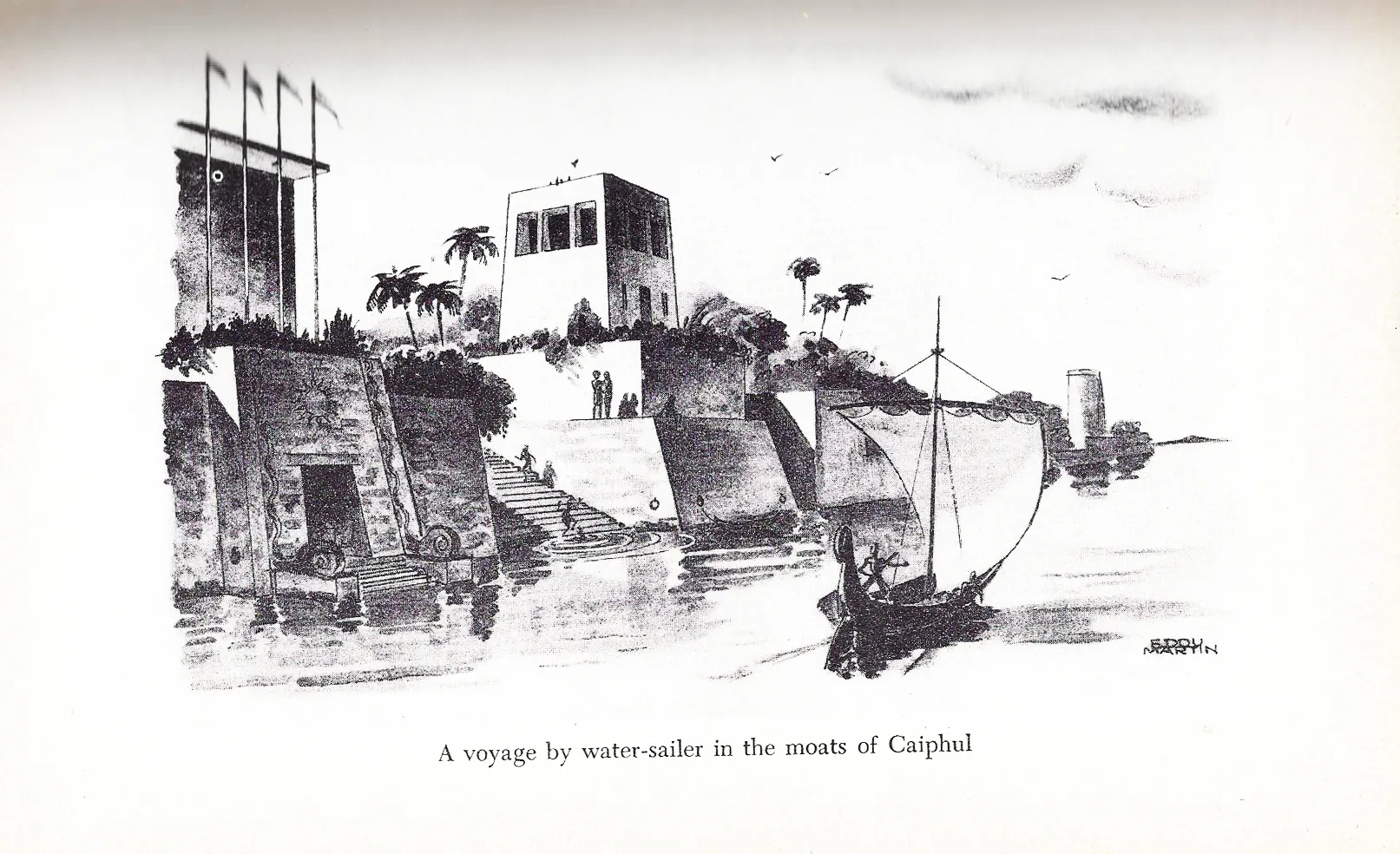
In a city where everyone flies, Zailm and a friend rent a little water-sailer from a poor man who makes his living off the few people who still enjoy the old way. They sail the moat out through the mouth of the Nomis, the river that circles the whole city, and into open ocean.
Martin kept it quiet and flat. We gave it color, the high white walls of the city, and water you want to put your hand in. This is the image that brought my dream back.
3. The princess of a destroyed army
1940 edition
Cineira concept
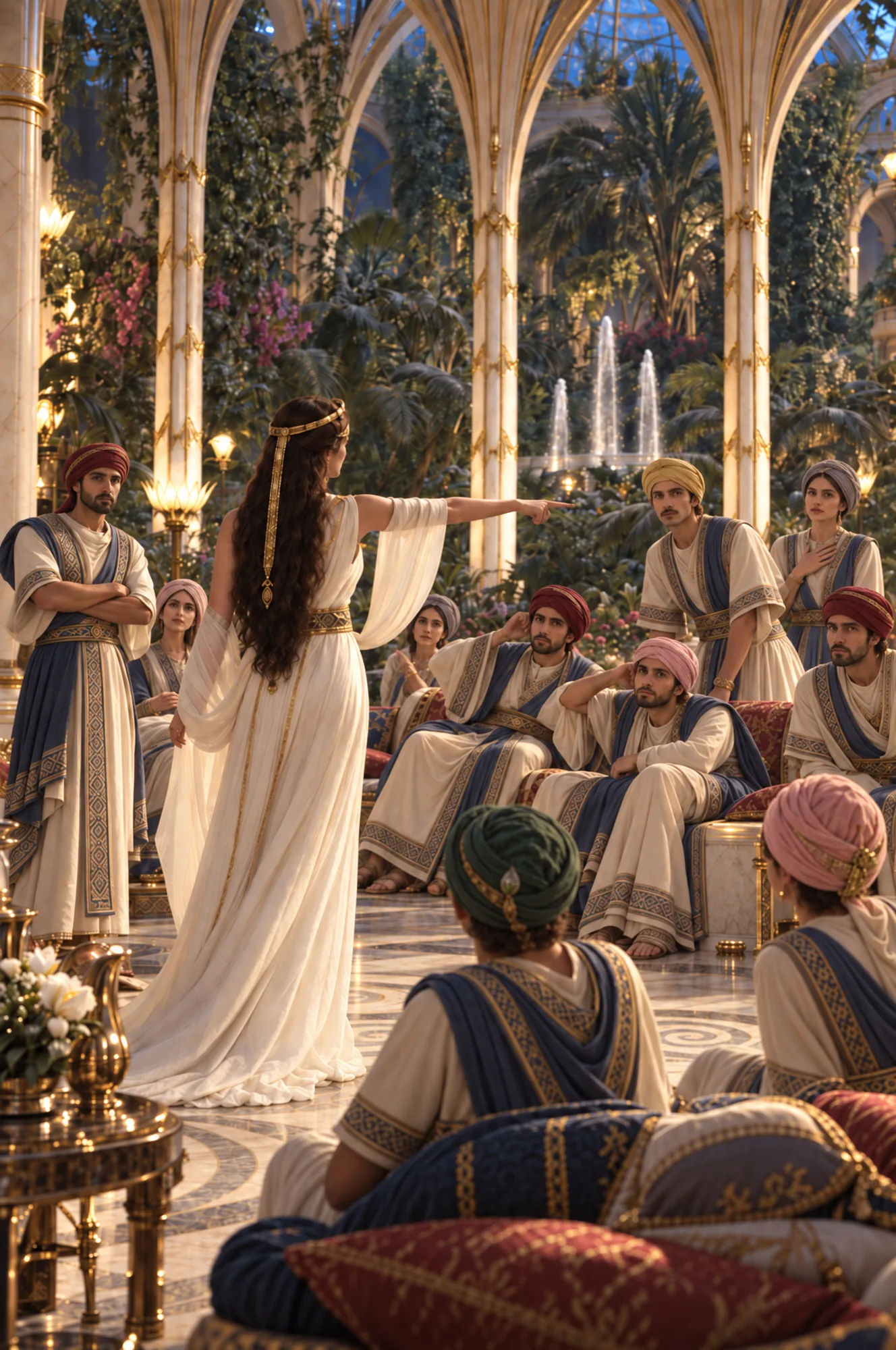
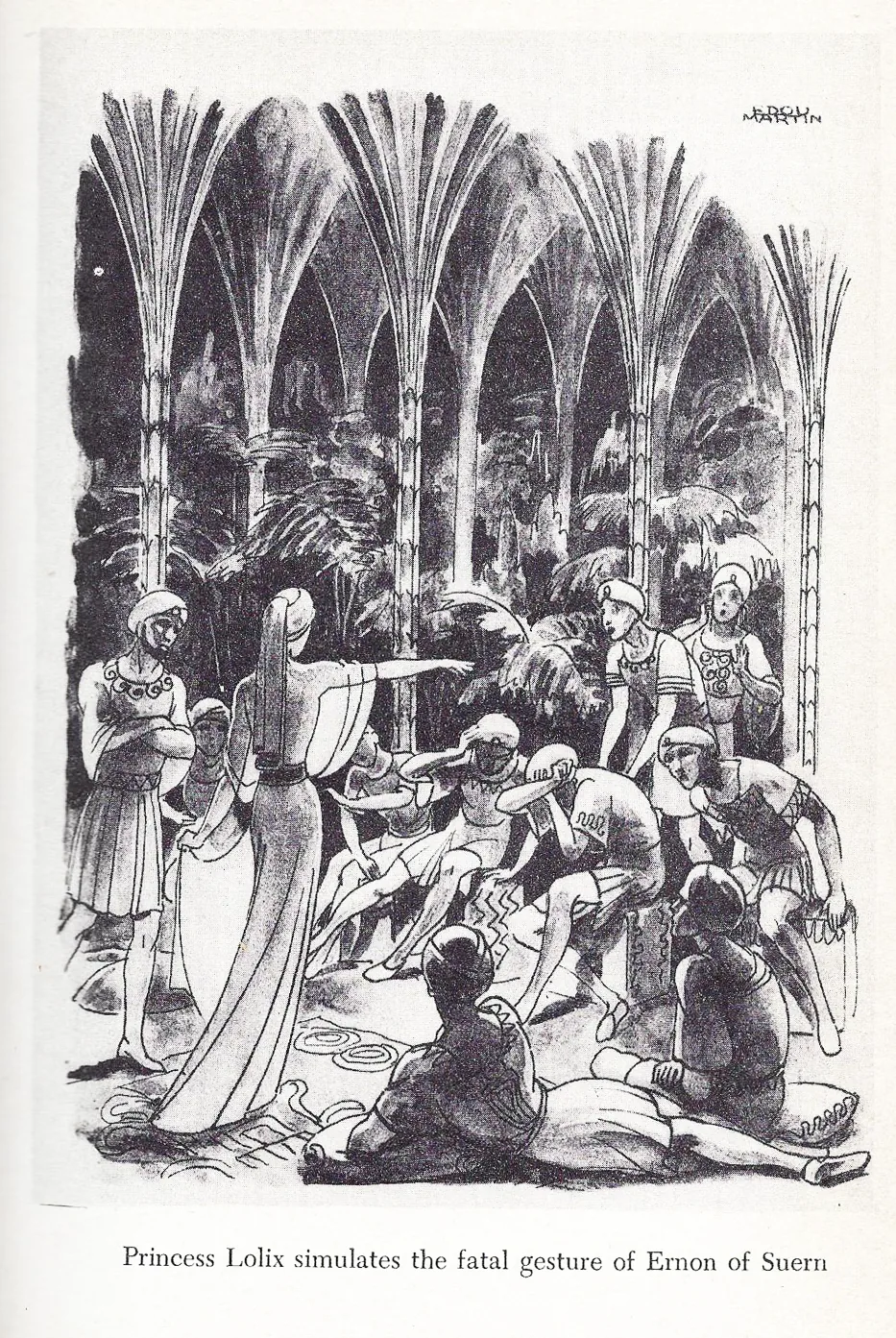
This is Lolix. Of everyone in the book, she's the one I carry.
She is a princess of Salda. Her people marched an army against Suern, and Ernon, the ruler of Suern, destroyed it with a single gesture. Here she is telling that story to a gathering in Caiphul, and she rises to act it out.
Our image stops a heartbeat early. Her arm is out. The room is still just listening. In the book, the next moment is the one that matters. Her arm sweeps over the heads of the people on her left, and they cower without meaning to. Grown men, flinching from a story. Lolix looks at them and her lip curls. "Cowards!" she mutters.
Martin drew the flinch. We drew the breath before it. Later Zailm says of her, "Lolix did nothing by halves." This is what he means.
4. The calm before
1940 edition
Cineira concept
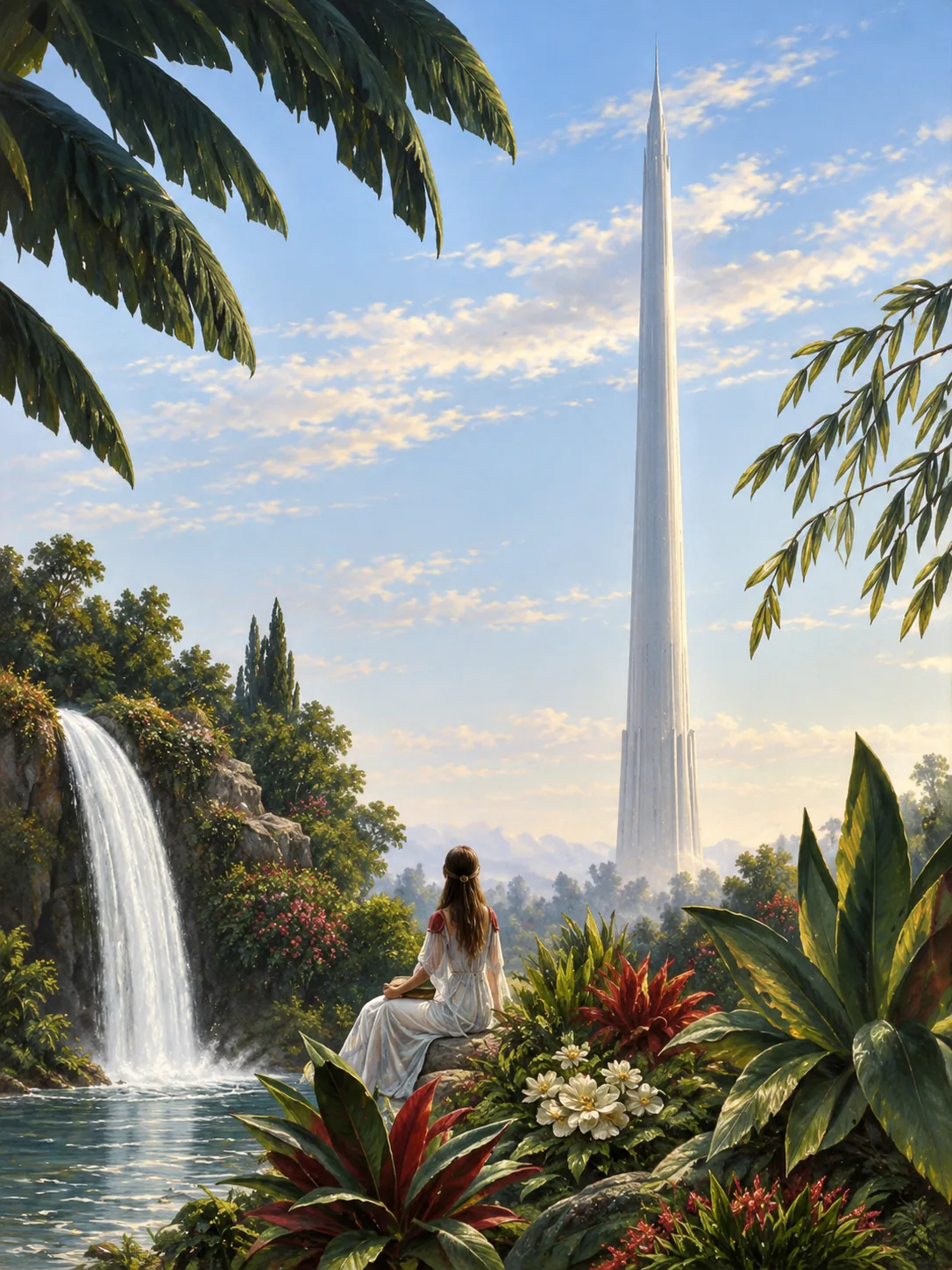
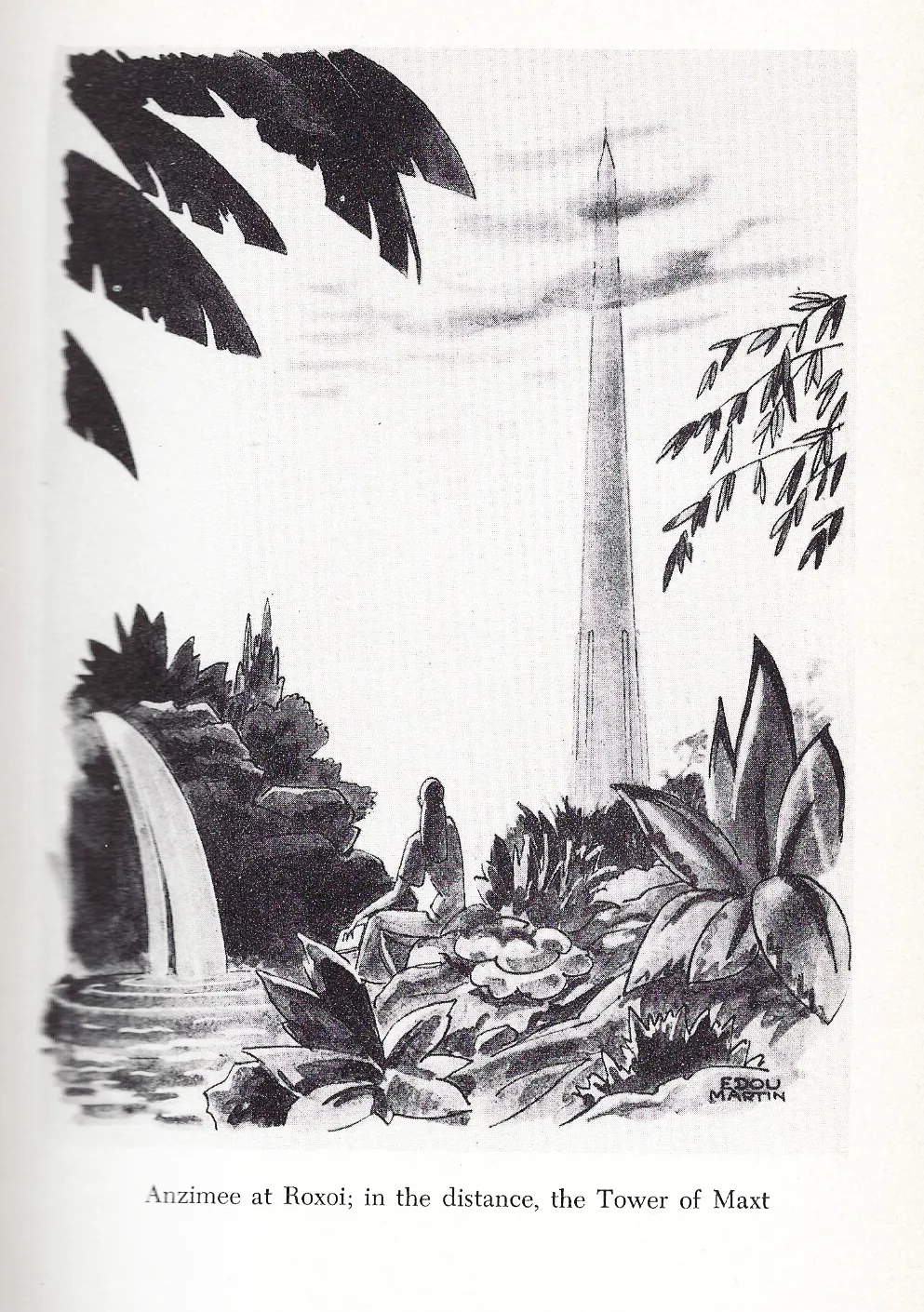
It's the most beautiful image in the set. Once you know the story, it's also the most painful.
Zailm has been Lolix's lover, in secret. Now he wants to marry Anzimee, the daughter of the man who adopted him. He goes to Roxoi to propose, because that's where Anzimee is staying. Roxoi is also where Lolix lives.
He ends it with Lolix there, in the conservatory, among the flowers. She is worn and pale. She holds him once, and her lips, he writes, were "chill as those of one who keepeth company with Death." Then she's gone.
Anzimee sits by the water and knows none of it. We kept Martin's composition almost exactly. Peace in the foreground. Everything else just out of frame.
5. A silent witness
1940 edition
Cineira concept
This is the heart of Book One, and I'm not going to soften it.
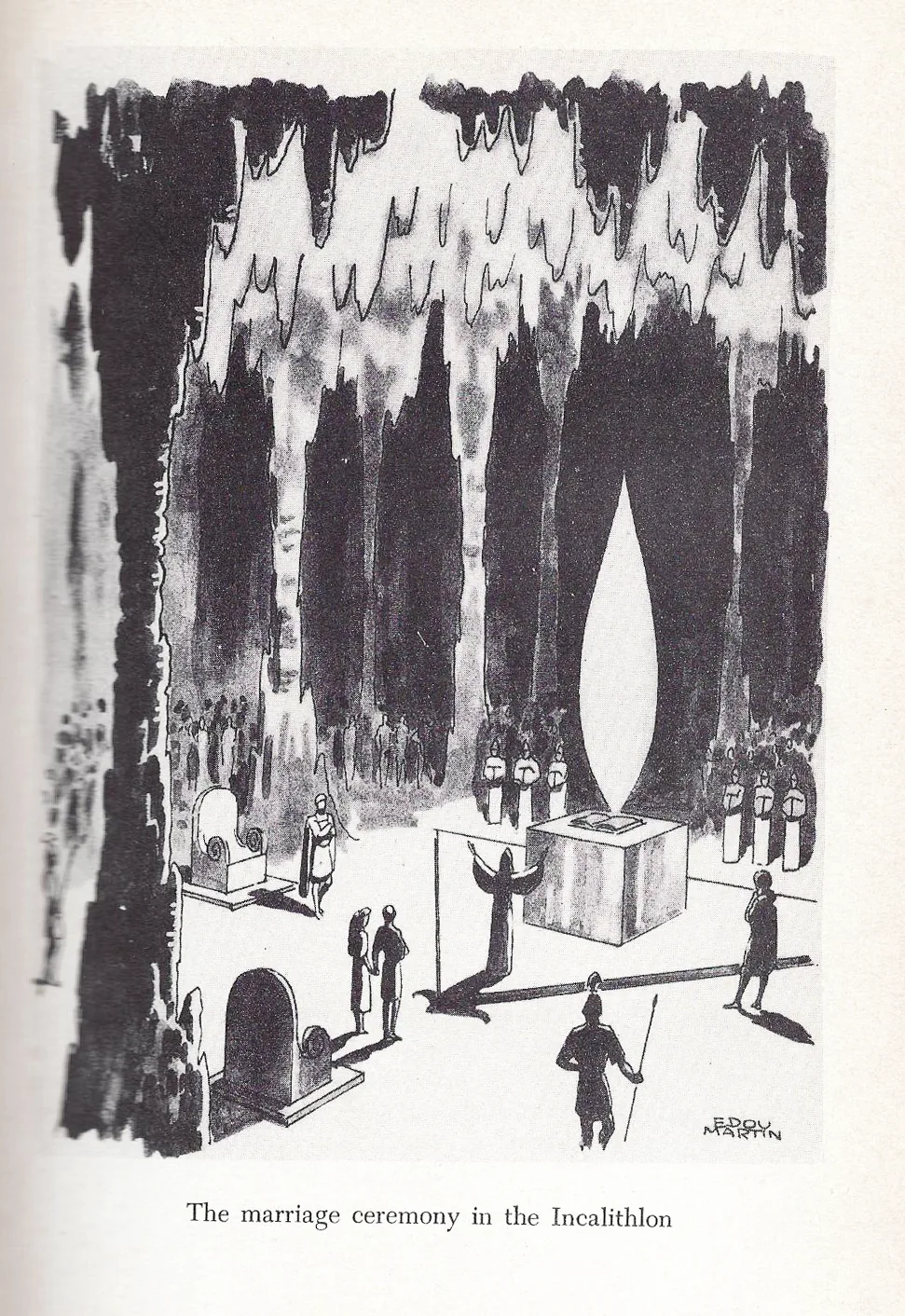
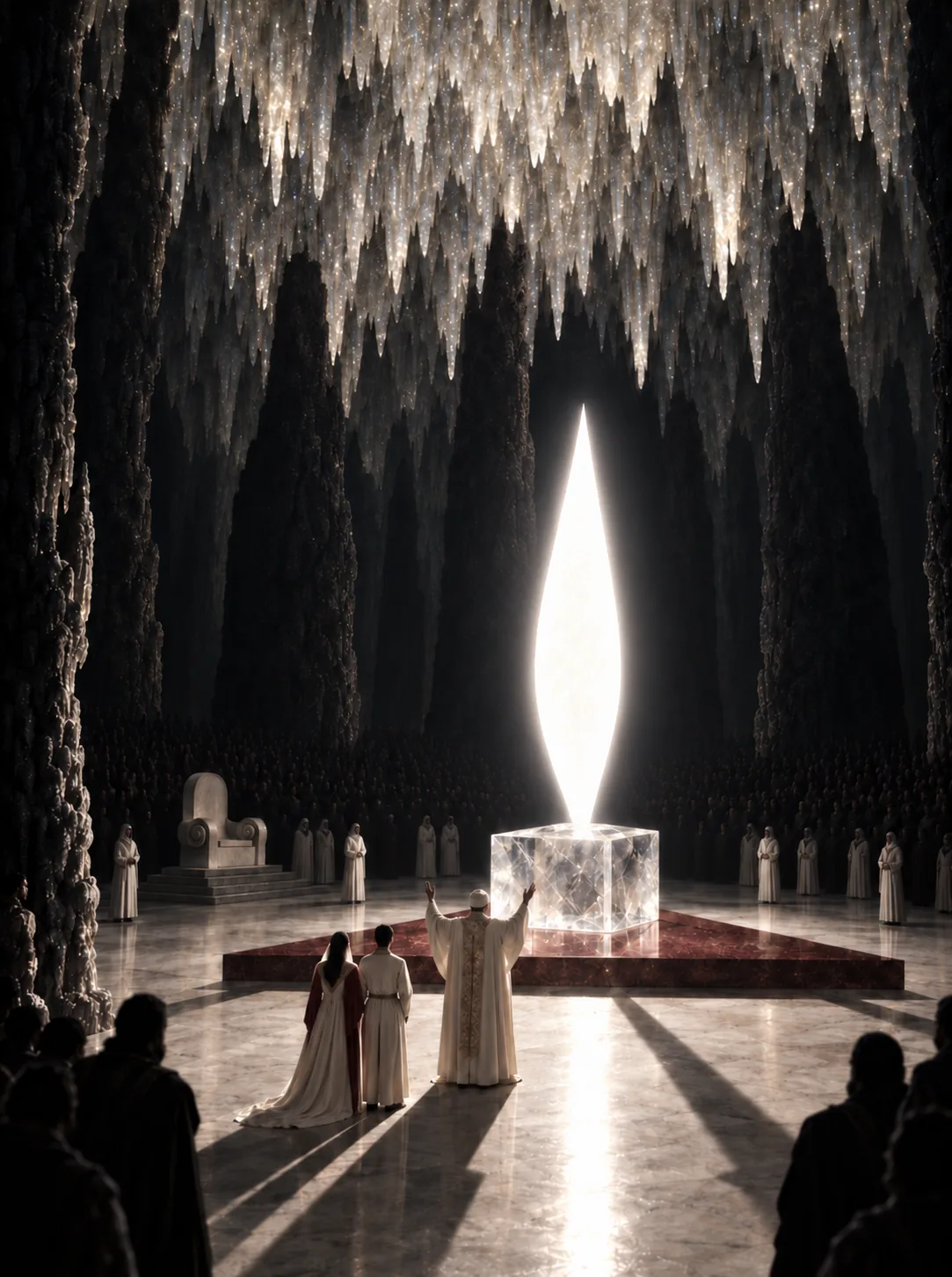
The 1940 caption calls it a marriage. In the book it's the banns, the formal announcement that Zailm and Anzimee will wed. The high priest Mainin reads them in the great temple, before the Unfed Light.
Lolix walks in. She says she has come to wed Zailm herself, "this dagger our wedding proclamation." She strikes at his heart. He throws up his arm and the blade goes through it. She sees his blood and screams, and runs to the Maxin, the sacred cube at the center of the temple, where the law says no one may lay a hand on her.
Mainin looks at her and says, very softly, "There thou shalt stay, indeed, even longer than thou thinkest!"
When the ceremony is over, Zailm goes to her. She doesn't answer. He touches her hand. It's cold. Then he understands. She is stone. Her robe, her hair, her body, turned to rock where she stood. A finger breaks off in his hand.
The emperor, Gwauxln, orders the statue left where it stands. "Let it stand a silent witness before the criminal."
The criminal is Zailm. He knows it.
I teared up more than once reading Lolix's chapters. Phylos gives her closure in Book Two. Book One gives her nothing.
Martin's plate is towering dark stone and tiny figures. We kept that scale and made the Unfed Light the only real light in the room. Lolix isn't in our frame. Not yet. You know where she's going to stand.
6. The priest in the cave
1940 edition
Cineira concept
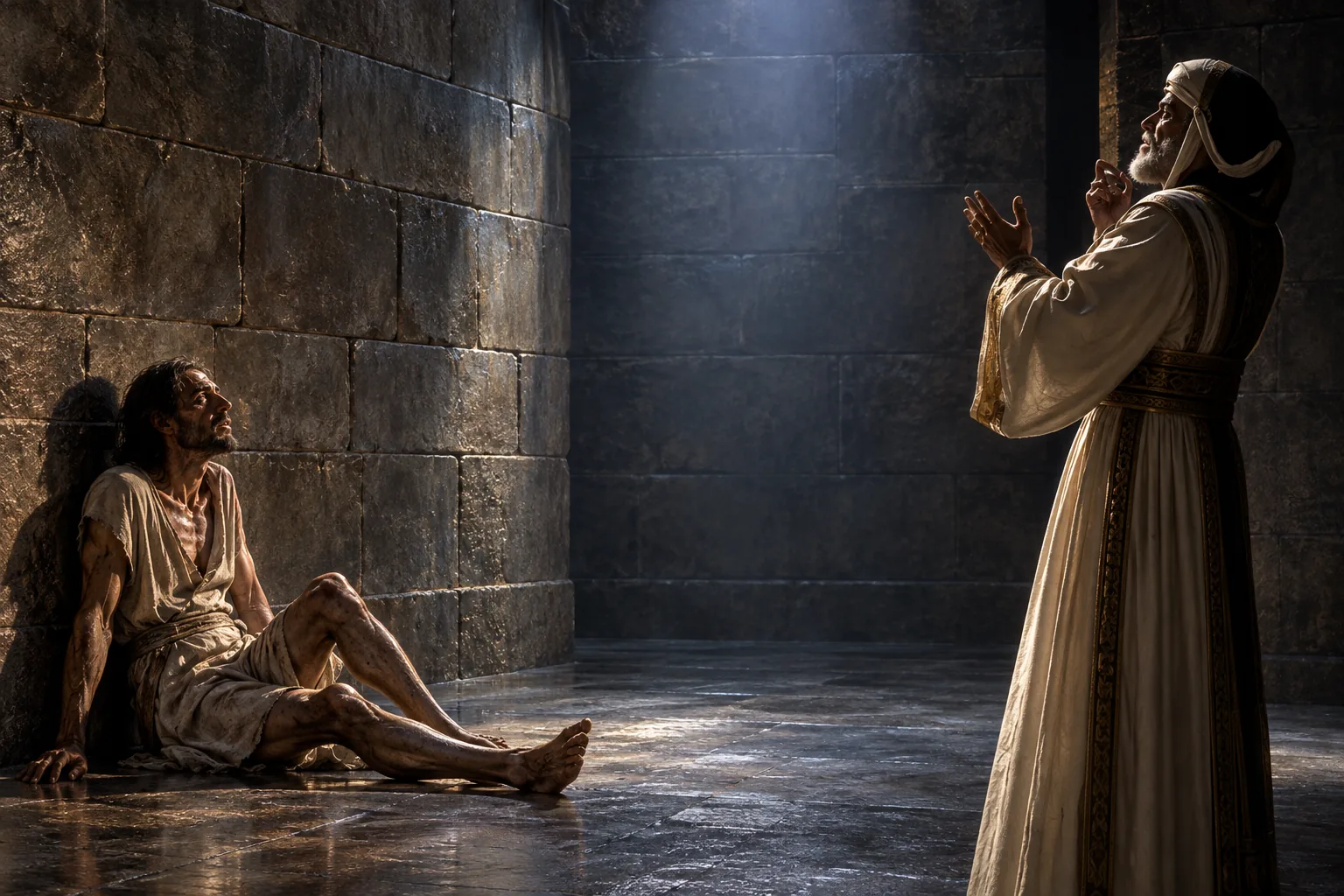
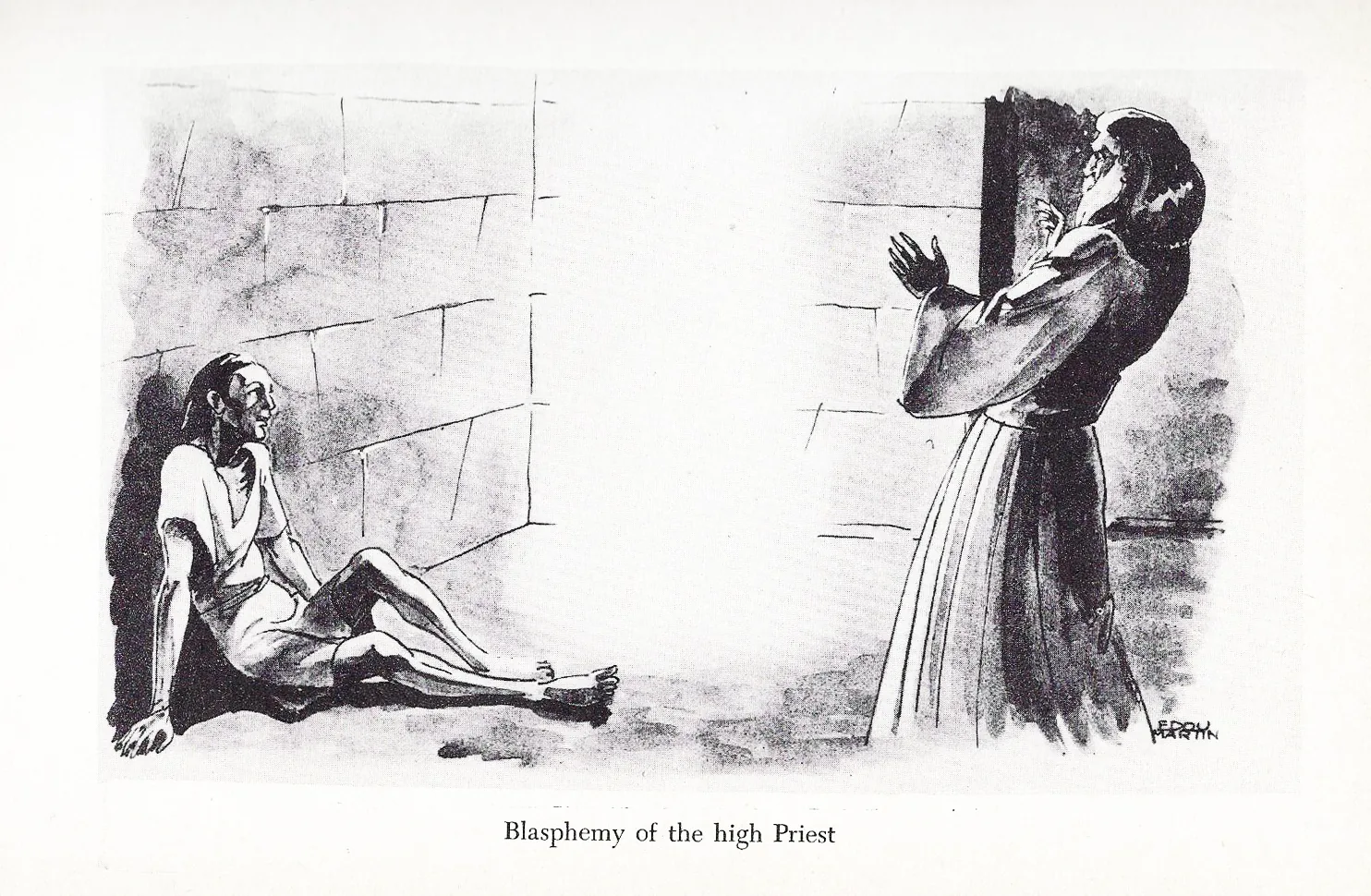
Zailm runs. He takes his private vailx, cuts himself off from everyone, and drifts until he lands in the Atacama to prospect for gold. He follows a cave deep into the mountain and ends up trapped. His only visitor is Mainin.
In the dark, the high priest drops the mask. There is no God, he says. He came into this life to ruin Anzimee.
What happens next is the most openly spiritual moment in the book. We're saving it for the film.
Martin put a wall between the two men and let their bodies tell it: Zailm collapsed on the floor, Mainin standing in the doorway with his arms raised. We kept all of it.
7. Remorse
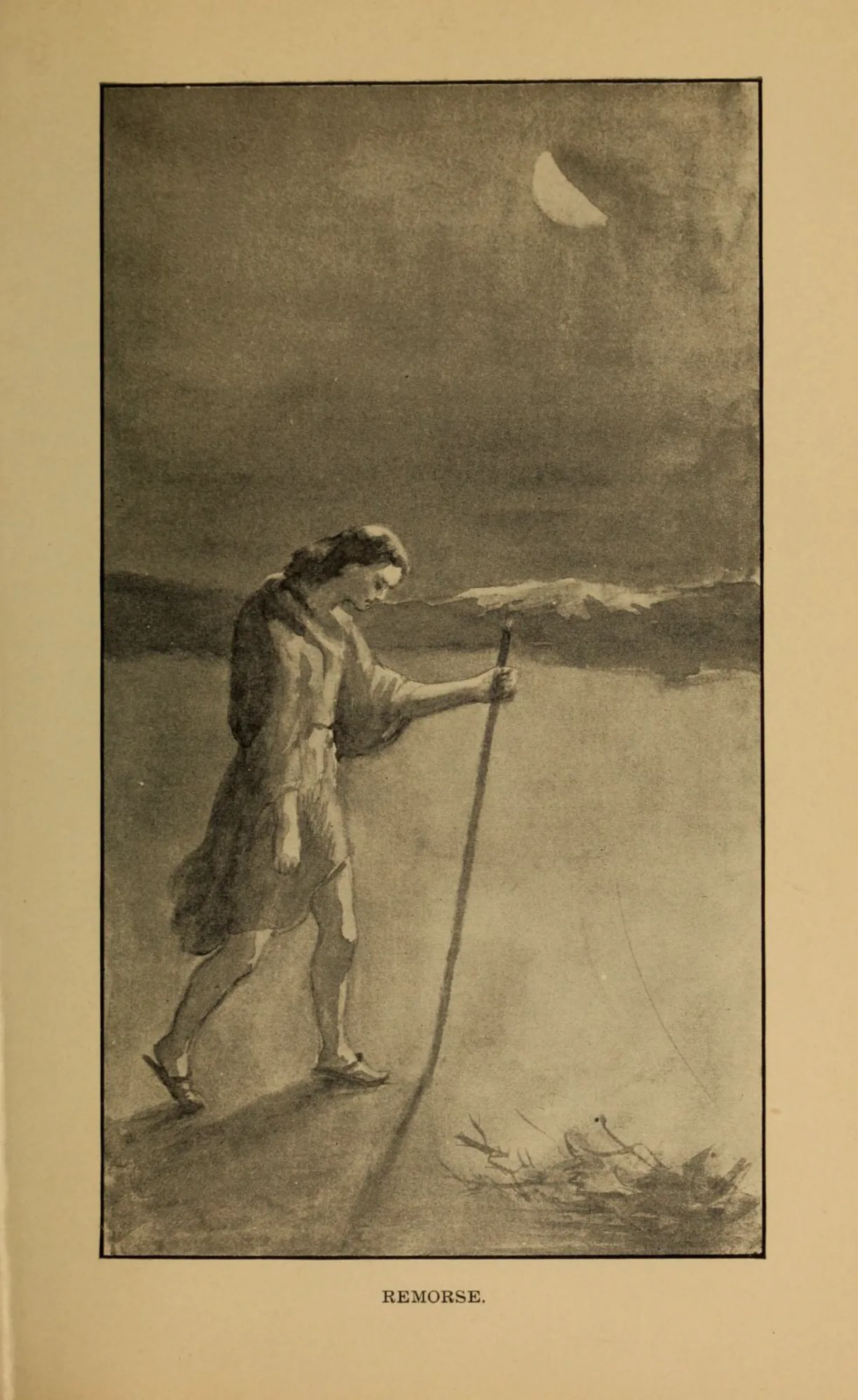
1905 first edition
Cineira concept
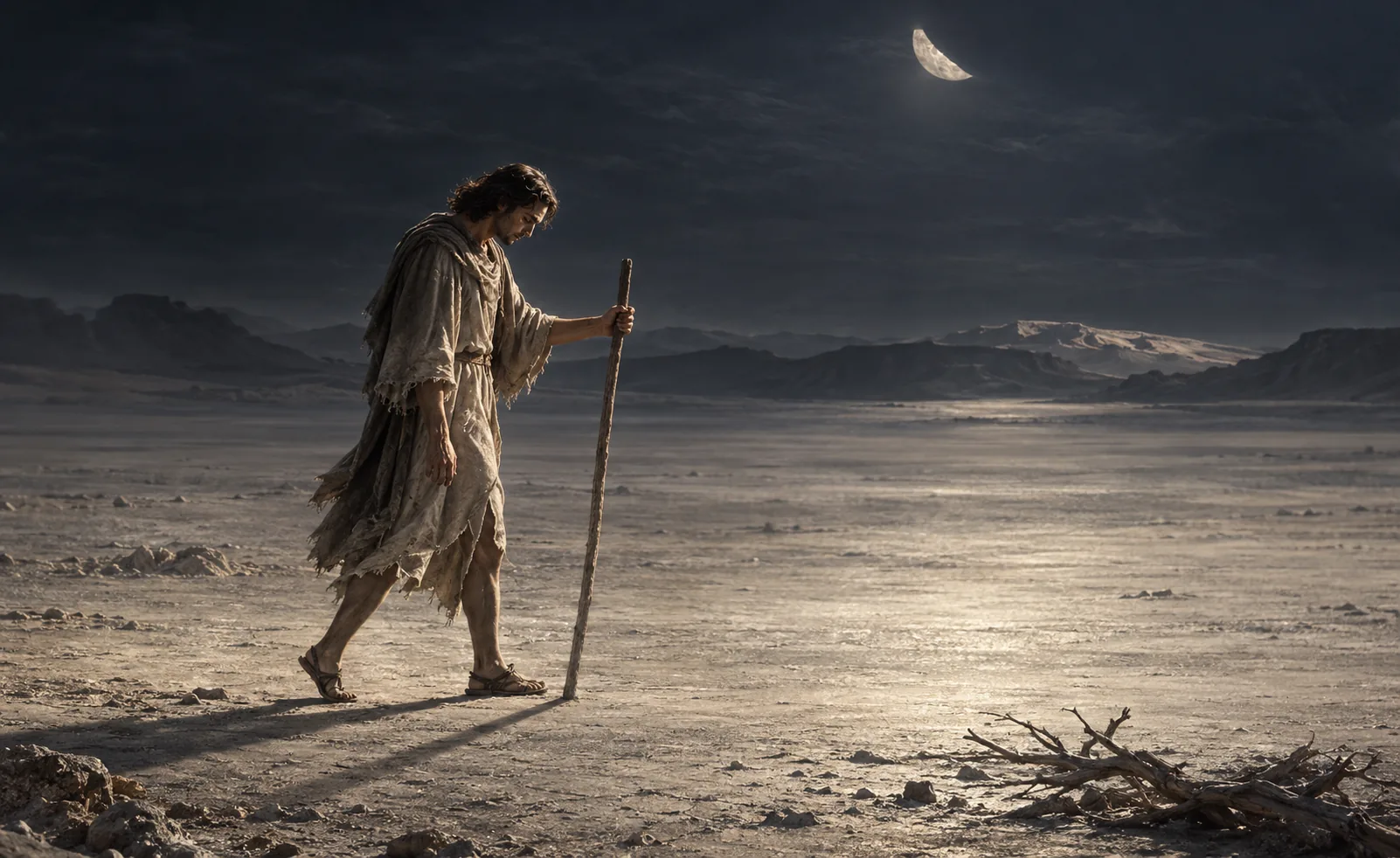
Trapped, waiting to die, Zailm dreams. "My soul sat on a verdureless shore looking across a limitless ocean."
The 1905 plate shows him alone on a bare shore under a thin moon, leaning on a staff. Ours is close to a straight translation. The original got it right the first time.
Two dreams of the ocean. Mine brought peace. His brought the weight of everything he had done.
The whole film lives somewhere between those two shores.
None of these images is final. But this is the direction, and this is what's possible now. More soon.
Related