From the Filmmaker
What Technology Changes and What Storytelling Never Will
October 26, 2026
By Dan Neira
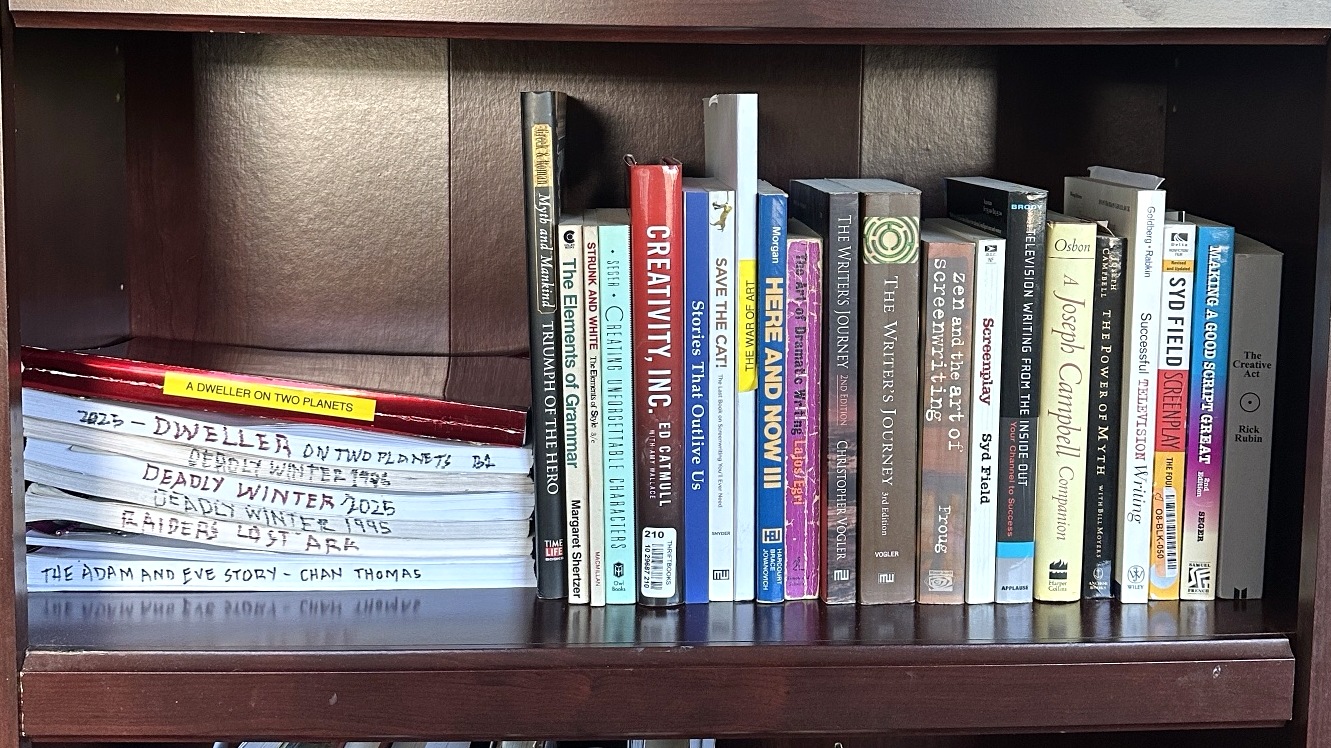
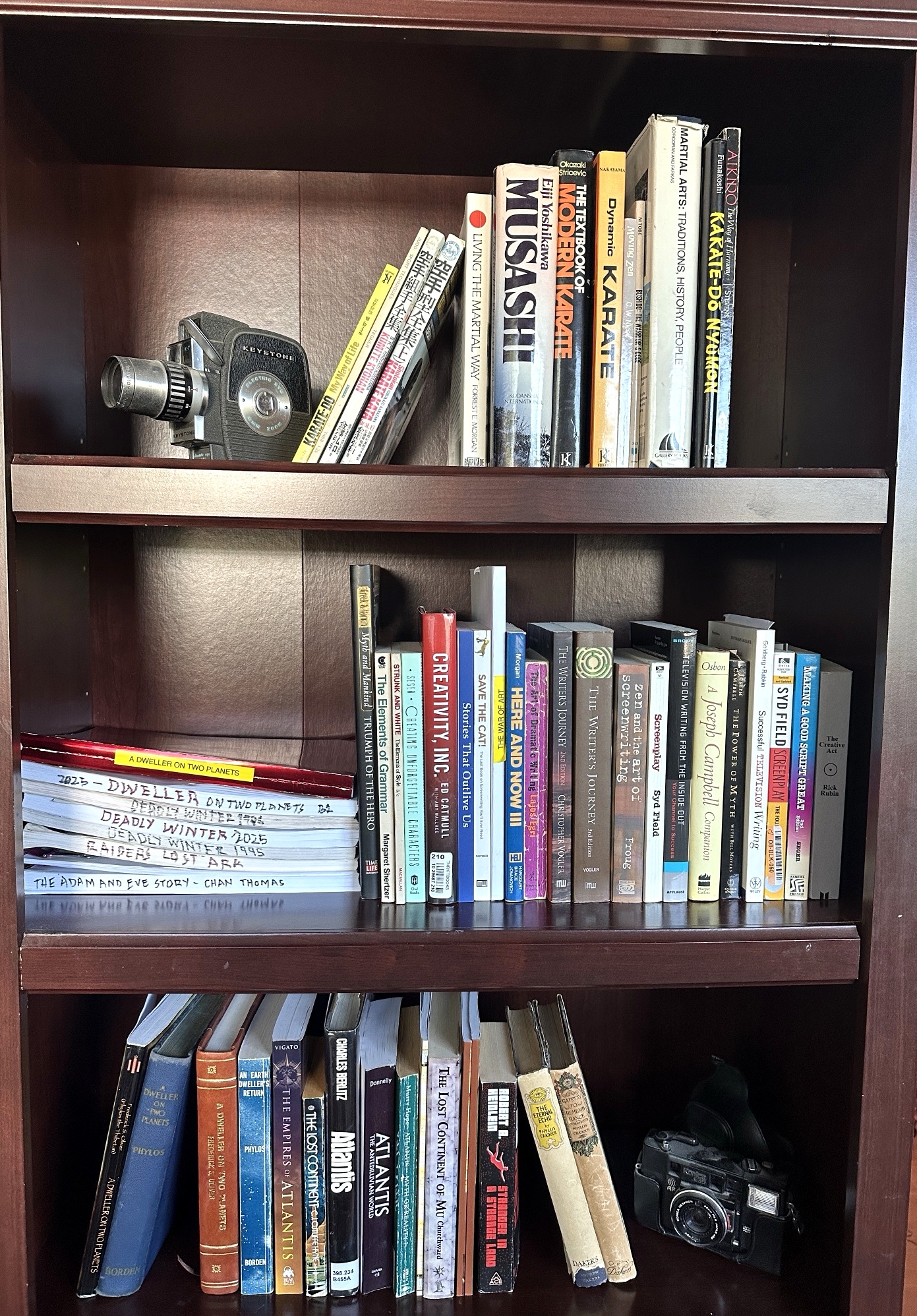
I have a wall of books in my house. Some of them I read cover to cover. Some I read one chapter of, because one chapter was all the script needed. Every one of them is a receipt for how research used to work.
You wanted to write about something you didn't know, you went and got the books. You drove to the library. You found the shelf, pulled what looked promising, sat at a table and read until closing. If the library didn't have it, you bought it, and waited for it to arrive. A single subject could eat a month before you wrote a line of dialogue.
I don't miss the driving. I do miss some of the accidents. The book next to the one you came for was sometimes the better book.
Three Ways to Learn a World
Then the search engines arrived, and the month became an afternoon. Not because the search bar knew everything. It didn't. But it told me where the knowledge lived. Which book. Which expert. Which archive. It shortened the road to the shelf.
Then came AI, and that one changed the game.
Now I can sit down with a subject I know nothing about and, inside a few hours, have a thorough picture of it. The history, the vocabulary, the arguments people have about it, and the sources those people rely on. That last part matters most to me. A good answer comes with a trail I can follow back to a real book or a real person.
How I Use It
I never take one answer as gospel. Any model can be confidently wrong, and the confident ones are the dangerous ones.
So I ask the same question to several of them. Then I hand each one the others' answers and let them argue. Where they agree, I trust a little more. Where they disagree, that's where I start digging, because the disagreement usually marks the exact spot where the real complexity lives.
And then I still go to the books. I still call people who have done the thing I'm writing about. The machine shortens the timeline. It doesn't replace the expert who lived it.
What It Did for Two Scripts
The Eagle and the Serpent lives inside a world I have never been part of, thank God. To write it honestly I needed to understand how criminal organizations actually operate, here and around the world. How money moves. Who answers to whom. I needed the military that trained Winter, the way it shapes a person, what it teaches and what it costs. And I needed to know how law enforcement would really respond to the situation I put her in, so the third act wouldn't collapse the moment a real agent read it.
Years ago that would have been a year of reading. This time it was weeks of very focused work, then the books and the people to check it.
A Dweller on Two Planets was the opposite problem. Atlantis has a library of its own, and I read volumes of it. But the novel also reaches for science, ideas about energy and light and travel that sound like fantasy until you look at what they were reaching for. AI let me chase those threads to their sources and understand what the author was gesturing at, so the film can treat it with the seriousness the book does.
What Never Changes
Here is the part no tool has touched.
All that research gets me to the door. It doesn't walk through it.
It can tell me how a criminal organization moves money. It can't tell me what Winter feels when she tries to say goodnight to her daughter and the words come out wrong. It can explain the structure of a military unit. It can't tell me the exact moment a man in that unit stops calling her by her name. That moment is the scene. Everything else is furniture.
Every tool I've used has made knowing cheaper. None of them has made caring cheaper. An audience still has to care about someone before anything on screen matters to them. Change still has to cost the character something real, or nobody believes it. A world still only exists when it costs somebody something.
And here is the thing about research that took me too long to learn. Most of it should never reach the screen. You do the reading so you can throw it away with authority. The audience can feel when a writer knows more than he's saying. They can also feel when he's showing off his homework. The first builds trust. The second kills a scene.
No machine decides what to cut. That's still the job.
The Same Job
I've watched a lot of technology arrive in this business. Each new tool was supposed to change everything, and each one changed something. Cheaper cameras. Faster edits. Wider distribution. Faster research.
The job underneath never moved. Find a person. Put something they love at risk. Tell the truth about what it costs.
I'll keep using every tool that helps me do that better. The library, the search bar, the machines that argue with each other. And the wall of books stays exactly where it is.
Related